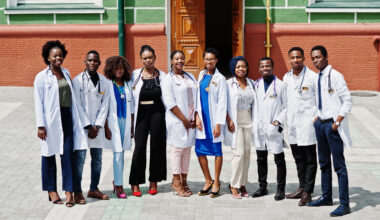
European Health Scholarships: Powerful Opportunities for Health Students in Europe
Meta Description: Discover the best European Health Scholarships for health students, including Erasmus Mundus, DAAD, Swedish Institute, NL Scholarship and Chevening.
URL Slug: european-health-scholarships-top-opportunities
Introduction
Studying healthcare in Europe can open doors to excellent education, international experience and exciting career opportunities. Unfortunately, the cost can make that dream seem out of reach.
Tuition is only one part of the expense. Accommodation, transportation, insurance, visa costs and everyday living expenses can quickly add up for an international student.
That is where European Health Scholarships become important.
Although there is no single scholarship officially called the “European Health Scholarship,” numerous funding opportunities can support students pursuing health-related education across Europe. Depending on the programme, applicants may find support for public health, nursing, pharmacy, medicine, epidemiology, global health, healthcare management, biomedical sciences and related fields.
Some awards provide substantial financial support, while others cover only part of the total cost.
Therefore, the goal is not simply to find a scholarship. Instead, you need to identify the right programme, understand its funding package and prepare an application that clearly connects your education with your future career.
This guide highlights major opportunities and gives you a practical strategy for finding and applying for health-related scholarships in Europe.
What Are European Health Scholarships?
The term European Health Scholarships describes scholarships and other funding opportunities that can help students study health-related subjects at European universities.
Health education covers far more than medicine.
Depending on the programme, students may explore areas such as:
- Public health
- Global health
- Nursing
- Pharmacy
- Epidemiology
- Health policy
- Healthcare management
- Health economics
- Biomedical sciences
- Nutrition
- Digital health
- Environmental health
- Health data science
- Health promotion
This wider definition can make your scholarship search much more productive.
For instance, a pharmacy graduate interested in disease prevention could pursue public health rather than another pharmacy degree. Similarly, a nurse interested in healthcare leadership could consider health policy or healthcare management.
The best approach is to search according to your academic background, career interests, and preferred degree.
Why European Health Scholarships Are Worth Exploring
Europe offers a wide range of academic environments for students interested in healthcare.
International learning opportunities
Many programmes bring together students and universities from different countries.
Erasmus Mundus Joint Masters are a particularly strong example. These programmes are delivered through international partnerships and involve study periods in at least two countries different from the student’s country of residence. (Erasmus+)
Financial assistance
Depending on the award, funding may help with:
- Tuition or participation costs
- Monthly living expenses
- Travel
- Visa expenses
- Insurance
- Other study-related costs
However, funding packages vary considerably. Always read the official scholarship conditions before making financial plans.
Professional networking
Healthcare is increasingly international.
A student studying public health, epidemiology, pharmaceutical sciences or health policy may work with people from several countries during their career.
Consequently, an international study experience can provide both academic knowledge and valuable professional connections.
Top European Health Scholarships to Consider
1. Erasmus Mundus Joint Master Scholarships
Erasmus Mundus Joint Masters should be near the top of your list if you want an international master’s programme with significant scholarship support.
These programmes are developed by partnerships of higher education institutions in different countries. Students can study across multiple locations and gain an international academic experience.
According to the European Commission, students from around the world can apply. The highest-ranked candidates may receive Erasmus Mundus scholarships.
Under the current Erasmus+ rules, the individual scholarship is calculated at €1,400 per month for the duration of the master’s programme, with a maximum calculation of 24 months. Funding can contribute toward participation costs as well as travel, visa and living expenses. (Erasmus+)
Official information:
https://erasmus-plus.ec.europa.eu/opportunities/individuals/students/erasmus-mundus-joint-masters
Health students should search the Erasmus Mundus catalogue for terms such as:
- Public health
- Global health
- One Health
- Epidemiology
- Infectious diseases
- Biomedical sciences
- Health data
Remember that Erasmus Mundus is a large programme rather than one health-specific scholarship. Each master’s programme has its own academic requirements and application deadline.
2. Europubhealth+
Public health students should take a particularly close look at Europubhealth+.
This Erasmus Mundus Joint Master focuses specifically on public health. Its multidisciplinary structure can appeal to students who want to work on population-level health challenges rather than concentrate solely on clinical care.
Potential areas include:
- Epidemiology
- Biostatistics
- Health promotion
- Health systems
- Health services management
- Environmental health
- Public health leadership
- Health data science
The programme’s official funding information explains that Erasmus Mundus scholarships are available to selected high-ranking students, with the applicable allowance reaching up to €1,400 per month. (Europubhealth+)
Official website:
https://www.europubhealth.org/
A background in medicine, nursing, pharmacy or another relevant discipline can provide a useful foundation, although applicants must still meet the programme’s specific admission criteria.
3. DAAD Scholarships in Germany
Germany deserves attention from students searching for European health funding.
The German Academic Exchange Service (DAAD) maintains a scholarship database containing funding opportunities for international students, graduates, doctoral candidates and researchers.
You can search the database according to factors such as:
- Country of origin
- Academic level
- Subject
- Scholarship purpose
Official scholarship information:
https://www.daad.de/en/studying-in-germany/scholarships/
Health-related applicants can benefit from the database’s broad subject coverage. Its listings include Human Medicine, while other programmes may suit students in public health, life sciences and related fields. (DAAD Scholarship Database)
The important point is that DAAD does not represent one universal scholarship.
Instead, it offers a collection of different funding opportunities. Your eligibility therefore depends on the individual programme.
4. DAAD Study Scholarships for Master’s Study
Students planning a master’s degree should also investigate DAAD’s Study Scholarships for Master’s Studies.
The official DAAD scholarship database includes Human Medicine among the academic disciplines associated with applicable opportunities, although the exact conditions depend on the scholarship and applicant.
You can search the database here:
https://www2.daad.de/deutschland/stipendium/datenbank/en/21148-scholarship-database/
Before applying, check the specific:
- Nationality requirements
- Academic requirements
- Study programme
- Funding period
- Application deadline
- Required documents
Doing this early can save you from preparing an application for a scholarship you cannot receive.
5. Swedish Institute Scholarship for Global Professionals
Sweden is another attractive destination for international master’s students.
The Swedish Institute offers scholarships to eligible applicants under its Scholarship for Global Professionals scheme and other applicable funding arrangements.
However, eligibility depends on the scholarship cycle, nationality, and master’s programme.
Official scholarship portal:
https://apply-scholarships.si.se/
Prospective students should also check which master’s programmes qualify before beginning the scholarship application.
The Swedish Institute’s published 2026/27 information, for example, placed the scholarship application period in February 2026. That is a good reminder to verify dates for your intended intake rather than relying on old articles.
6. NL Scholarship in the Netherlands
Students considering the Netherlands should investigate the NL Scholarship.
The programme is aimed at international students from outside the European Economic Area who want to pursue bachelor’s or master’s studies at participating Dutch institutions.
For the 2026–2027 academic year, the award is €5,000 for the first year. (Study in NL)
There is an important catch, though.
The NL Scholarship does not cover full tuition.
Consequently, applicants need to calculate the remaining tuition and living costs before accepting an offer.
Other scholarships are also available in the Netherlands, so it is worth exploring the wider funding options listed by Study in NL:
https://www.studyinnl.org/finances/scholarships
7. Chevening Scholarships in the United Kingdom
Although the UK is no longer part of the European Union, it remains geographically part of Europe and is an important destination for international health students.
Chevening provides fully funded scholarships for eligible applicants pursuing one-year master’s degrees in the UK. (Chevening)
Official website:
https://www.chevening.org/scholarships/
Health professionals may use this route to pursue master’s programmes related to:
- Public health
- Global health
- Health policy
- Healthcare management
- Health economics
- Health systems
- International development
Chevening is highly competitive. Strong applications normally need more than good grades; applicants should demonstrate leadership, professional achievements, networking ability and a clear vision for the future.
For the 2027–28 cycle, applications opened on 4 August 2026 and close on 6 October 2026 at 11:00 UTC. (Chevening)
European Health Scholarships: Quick Comparison
| Scholarship | Destination | Study Level | Health Relevance | Funding |
|---|---|---|---|---|
| Erasmus Mundus | Multiple European countries | Master’s | Selected health programmes | Up to €1,400/month under current EU calculation |
| Europubhealth+ | Multiple European countries | Master’s | Public health | Erasmus Mundus scholarships available |
| DAAD | Germany | Master’s, PhD, research | Varies | Varies by programme |
| Swedish Institute | Sweden | Master’s | Selected programmes | Varies |
| NL Scholarship | Netherlands | Bachelor’s/Master’s | Depends on programme | €5,000 for first year |
| Chevening | UK | Master’s | Relevant programmes | Fully funded |
Funding, eligibility and deadlines can change. Always verify current details with the official provider.
Who Can Apply for European Health Scholarships?
There is no single eligibility rule.
Academic background
Most postgraduate scholarships require an appropriate degree.
Depending on the programme, you may need:
- A bachelor’s degree
- A recognised equivalent
- Relevant academic subjects
- A required academic standard
Some programmes are interdisciplinary, which can benefit applicants from different health backgrounds.
Professional experience
Certain scholarships value professional or leadership experience.
Relevant experience may include:
- Hospital work
- Pharmacy practice
- Nursing
- Research
- Community health
- Healthcare administration
- NGO projects
- Health education
What matters is not simply having experience. You should explain what you achieved and what you learned from it.
Leadership and impact
Leadership does not always mean holding a senior job title.
You could demonstrate leadership by:
- Organising a health campaign
- Coordinating volunteers
- Leading a student project
- Mentoring others
- Managing a community initiative
- Taking responsibility for a professional project
Specific examples are much stronger than vague claims about being passionate.
How to Apply for European Health Scholarships
Step 1: Define your career goal
Begin with the career you want to build.
Ask yourself:
- Do I want to remain in clinical practice?
- Am I interested in public health?
- Do I want to work in research?
- Could healthcare management suit me?
- Am I interested in health policy or digital health?
Your answers will help narrow your programme search.
Step 2: Find suitable programmes
Create a shortlist of five to ten relevant programmes.
For each one, record:
- University
- Country
- Degree
- Tuition
- Scholarship
- Eligibility
- Deadline
- Language requirements
Step 3: Check eligibility
Before spending hours on an application, confirm:
- Your nationality
- Academic qualification
- Required grades
- Work experience
- Language requirements
- Programme eligibility
- Application deadline
Step 4: Prepare your documents
Common documents include:
- CV
- Academic transcript
- Degree certificate
- Motivation letter
- Recommendation letters
- Passport
- Language certificate
- Research proposal, where required
Step 5: Tell a convincing story
A strong scholarship application should connect your past, present and future.
For example:
Healthcare experience → problem identified → skills needed → chosen degree → future solution
Imagine a healthcare worker who has repeatedly seen patients struggle with preventive health information.
Rather than simply writing, “I am passionate about public health,” the applicant could explain what they observed, what action they took, what they learned, and how advanced public health training would help them develop better community programmes.
That is a much more convincing story.
Common Mistakes to Avoid
Assuming every scholarship is fully funded
Some awards cover almost everything, while others provide only partial assistance.
Check the exact funding package before making financial commitments.
Applying without checking eligibility
Nationality, academic background, and work experience can all affect eligibility.
A quick eligibility check should come before a lengthy application.
Reusing the same essay
Every programme has a different purpose.
Tailor your motivation letter to explain why that specific course fits your goals.
Trusting outdated information
Scholarship deadlines and funding amounts can change from one academic year to another.
Use scholarship blogs for discovery, but confirm important details on official websites.
Ignoring partial scholarships
Partial funding can still make a major difference.
For example, the NL Scholarship’s €5,000 award does not cover full tuition, but it can reduce the financial burden considerably.
Build Your Healthcare Career Beyond Scholarships
Winning funding is only one part of your journey.
If international employment is part of your long-term plan, our guide to healthcare jobs abroad can help you explore possible destinations and career pathways.
Students searching for their first professional opportunity can also read our first healthcare job guide.
Healthcare careers extend beyond direct patient care, too. Our guide to non-medical hospital jobs explores other roles within healthcare environments.
Nursing students can also explore how to study nursing abroad for free as another starting point for international education research.
Meanwhile, students still pursuing their first degree can review global undergraduate scholarships before planning postgraduate study.
Think of the bigger journey as:
Scholarship → education → skills → experience → career → impact.
Frequently Asked Questions
Are European Health Scholarships fully funded?
Some are, but many are not.
Erasmus Mundus scholarships can provide extensive financial support to selected students. The NL Scholarship, by comparison, provides €5,000 for the first year and does not cover full tuition.
Can international students apply?
Yes, depending on the scholarship.
Erasmus Mundus Joint Masters accept applications from students around the world, although each programme has its own requirements.
Can pharmacy graduates study public health in Europe?
Yes, some public health programmes accept pharmacy graduates.
Europubhealth+, for example, lists pharmacy among relevant backgrounds, subject to its admission requirements.
Can nurses apply for European health scholarships?
Yes.
Depending on the programme, nursing graduates may qualify for master’s degrees in public health, global health, healthcare management, health policy and related fields.
Can I study public health without being a doctor?
Absolutely.
Public health is multidisciplinary. Programmes may accept applicants from medicine, nursing, pharmacy, biology, social sciences and other relevant backgrounds.
Is Germany a good option for health students?
Germany is worth researching because the DAAD scholarship database contains numerous funding opportunities across academic levels and disciplines.
However, each scholarship has separate eligibility rules.
European Health Scholarships Application Checklist
Before submitting your application, make sure you have:
- Confirmed the official eligibility requirements
- Checked your nationality
- Selected a suitable health-related programme
- Calculated tuition and living costs
- Confirmed exactly what the scholarship covers
- Updated your CV
- Prepared academic documents
- Arranged recommendation letters
- Completed required language testing
- Written a programme-specific motivation letter
- Explained your career goals
- Demonstrated relevant experience
- Confirmed the deadline
- Applied through the official website
Conclusion
Finding European Health Scholarships becomes much easier when you stop searching for one perfect scholarship and start looking at the wider funding landscape.
Erasmus Mundus offers an impressive route into internationally delivered master’s programmes. For public health students, Europubhealth+ deserves particular attention. Germany’s DAAD database provides another valuable starting point, while Sweden offers scholarship opportunities for eligible international master’s students. The Netherlands’ NL Scholarship can provide useful partial funding, and Chevening remains a major fully funded option for eligible master’s applicants in the UK.
The smartest strategy is to choose your academic direction first.
Once you know what you want to study, identify programmes that match your background. After that, investigate the scholarships attached to those programmes and compare the actual funding packages.
Most importantly, do not judge your chances solely by your grades.
Your experience, leadership, motivation, career plans and potential impact can all strengthen an application.
Start early, verify every requirement and give yourself enough time to create a thoughtful application.
Final Thought
A scholarship can be the financial bridge between a student’s ambition and an international education.
Yet the money is only part of the story.
The real value lies in what happens after you receive the opportunity.
Perhaps you will use your training to improve community health. Maybe you will contribute to research, strengthen healthcare systems, or develop better health policies. Another student may return home with skills that help address a problem they have witnessed for years.
That is why the best scholarship application is not simply about asking, “Why should you fund me?”
It should answer a bigger question:
“What will I do with the opportunity you give me?”
When your education, experience, and future goals form one clear story, your scholarship search becomes more than a hunt for funding. It becomes the beginning of a purposeful healthcare career.